The Upper Connecticut

New Hampshire · Connecticut Lakes tailwaters

The Upper Connecticut

Far-north cold water for wild brook trout and landlocked salmon — a chain of tailwaters dropping out of the Connecticut Lakes.

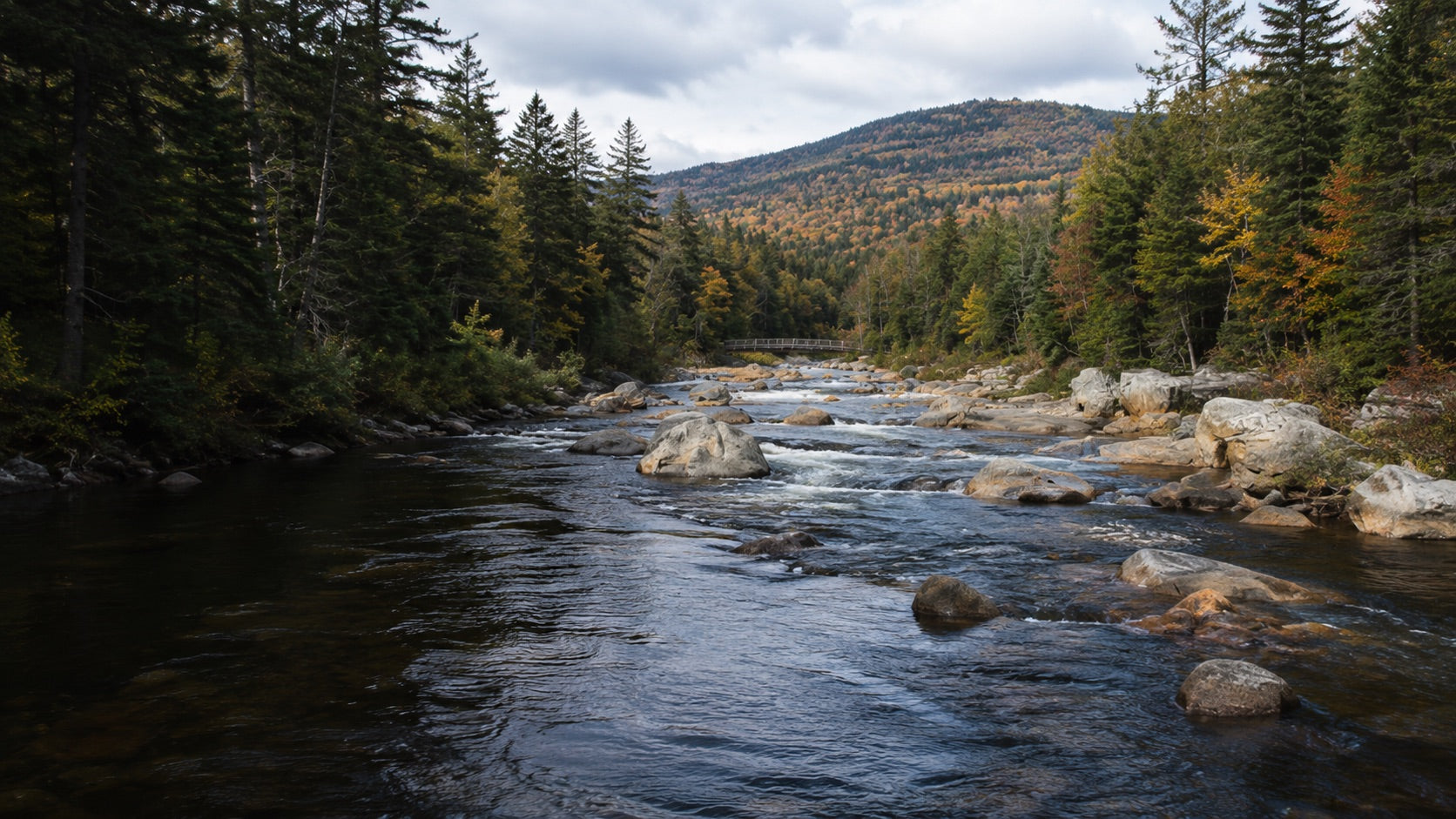
Up in Pittsburg, hard against the Quebec line, the Connecticut is born cold off the bottom releases of the Connecticut Lakes. The Trophy Stretch and the water below Murphy Dam fish well through August. A short season, and a glorious one.

Shop the Upper Connecticut box →

The water

About the Upper Connecticut

Up in Pittsburg — New Hampshire's northernmost town, hard against the Quebec line — the Connecticut River is born as a chain of cold tailwaters dropping out of the Connecticut Lakes. Water is drawn from the cold depths of each lake and released below its dam, so the river runs cold and fishes well through August while the freestones to the south are too warm to touch. This is remote, high, north-country water, and its two marquee fish are wild brook trout and landlocked salmon, with browns and rainbows in the mix.

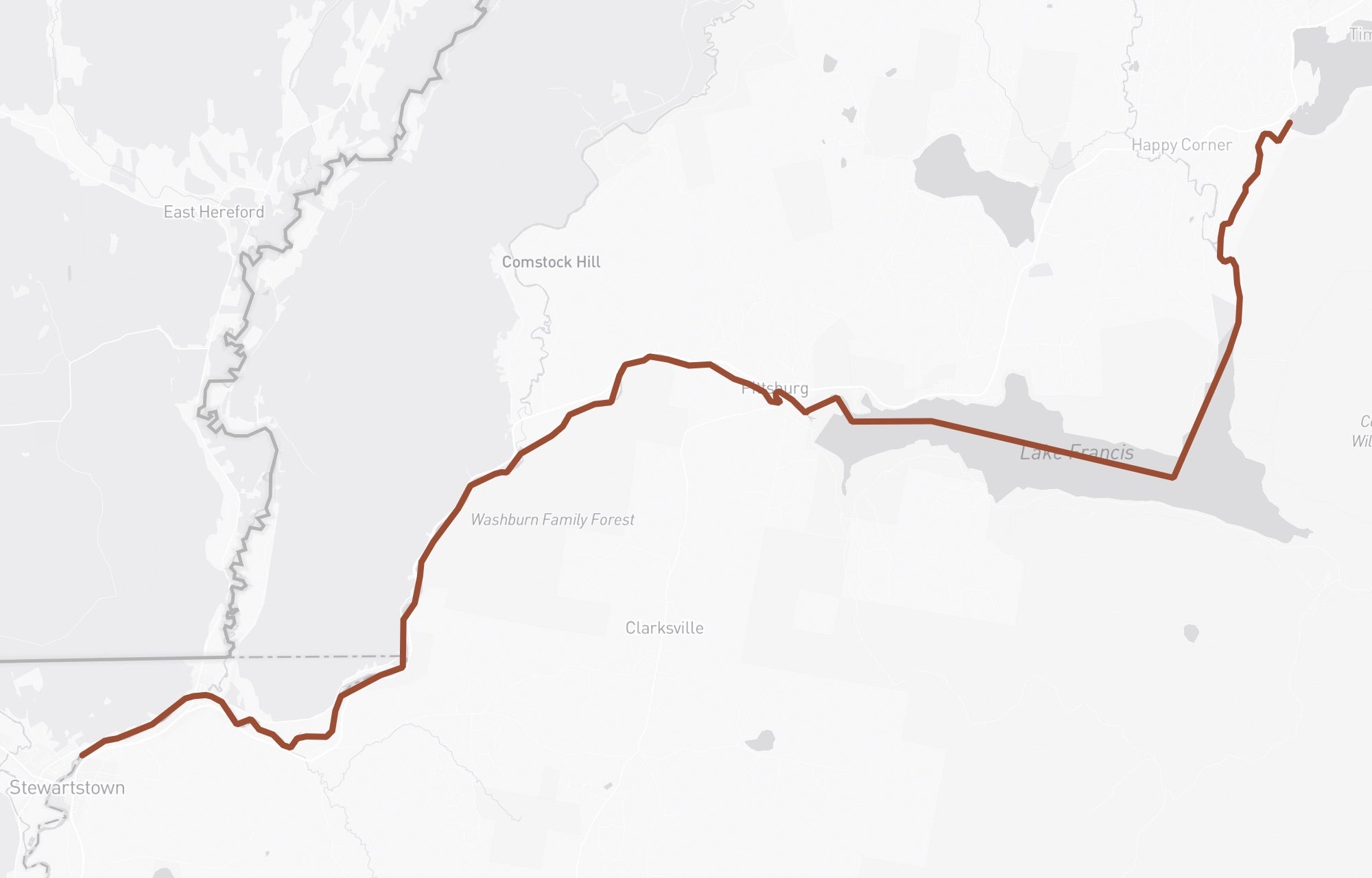
Working downstream, the fishery is really three reaches. The connecting river between Second and First Connecticut Lakes is dark, intimate pocket water full of wild brookies and salmon. Below First Connecticut Lake lies the Trophy Stretch — a little over two miles of pools and pocket water, cold off the bottom release, holding brook, brown, and rainbow trout and salmon. Below Murphy Dam (Lake Francis) runs the coldest, most consistent water of all — rarely much above the mid-50s even in a July heat wave — down toward Stewartstown and Colebrook. Route 3 follows the whole thing.

The season up here is short and it is glorious. Ice-out comes late — often not until late April — and the river closes in mid-October, so the whole show happens in about six months. It opens with the smelt run and the first push of landlocked salmon, builds through a big-water hatch season, holds cold and fishable all summer, and finishes with the fall spawning run. Streamers spring and fall, dries and terrestrials in between. Bring warm layers even in July; the nights are cold this far north.

Regulations & Stamp

Pittsburg has roughly five to six miles of fly-fishing-only water across these reaches:

  • Second Lake dam to the logging bridge: fly-fishing only, catch-and-release, all species.
  • Magalloway Road bridge to Green's Point: fly-fishing only, two-trout limit.
  • First Lake dam to Lake Francis (the Trophy Stretch): fly-fishing only, two-trout limit, 12-inch minimum.
  • Below Murphy Dam: seasonal — January 1 to March 31, catch-and-release, single barbless hook, artificial only; April through mid-October, general methods and limits.

Season: the river is open January 1 to October 15 (the big lakes close September 30). A New Hampshire fishing license is required.

Stocking: NH Fish & Game stocks the region, and the Connecticut Lakes carry a trophy program for lake trout and landlocked salmon. But the river also holds wild brook trout through the system and the salmon that run out of the lakes. Landlocked salmon run twice a year: in spring, roughly a week after ice-out, chasing the smelt spawn, and again in the fall as they push up to spawn near the end of September. The classic salmon flies — Gray Ghost, Magog Smelt, Black Ghost — earn their keep in both runs.

Second Lake dam to Colebrook

The Connecticut Lakes tailwaters — the connecting river, the Trophy Stretch below First Connecticut Lake, and the coldest water below Murphy Dam, all along Route 3 toward Stewartstown and Colebrook.

Key access, upstream to down

  1. The connecting riverBetween Second and First Connecticut Lakes — dark pocket water off Magalloway Road / Route 3; wild brookies and salmon.Get directions
  2. The Trophy StretchBelow the First Connecticut Lake dam; a trail runs most of its length with easy foot access from Route 3.Get directions
  3. Below Murphy DamThe coldest reach, near the dam and off River Road; the water the main USGS gauge sits on.Get directions
  4. Lake Francis State ParkRiver Road, off Route 3 — boat launches, visitor center, and access to the reservoir and upper river.Get directions
  5. Dam poolsAt Second Lake dam, First Lake dam, and Murphy Dam — all fish and all hold salmon at the right time of year.Get directions

This week on the water

River Report

The current read on the water, with live flow and water temperature from the USGS gauges.

River Report

September 25, 2026

Upper Connecticut is fishing well for September — flows are near normal and the bugs are on schedule.

Upper Connecticut is reading about 328 cfs at the Below Indian Stream gauge this week — within the typical range for the date. That's about as good as the reading gets for the date — the fish are where they should be and willing to move for a well-presented fly. As a bottom-release tailwater it runs cold and steady even in a heat wave — the reason it keeps fishing when nearby freestone rivers go warm and slow.

September on the water: Fall run — aggressive fish; streamers and swung wets shine. Right now that means Muddler Minnow, Woolly Bugger, Soft Hackle, and BWO — carry a couple of sizes of each and let what's actually on the water pick the fly.

The read: It's a good week to be out — mornings and evenings will fish best as the light comes off the water. Water temperature matters more than the calendar in September — if it climbs into the high 60s, give the trout a rest and come back when it cools. Always confirm the current NH Fish and Game regulations before you go.

Compiled from the USGS gauge at Below Indian Stream and regional hatch timing — a read on the water, not a substitute for your own eyes on it.

Conditions & Access

Loading flow…

Loading the last 30 days of flow…

The box for this water

The Upper Connecticut Box

Wild water through the north country asks for confidence flies, not fussy ones. Attractors, a terrestrial for the banks, and the mayflies that come off when the season turns.

$74.36$80.838 patterns · in a Day Tripper fly box

Save $6.47 vs. buying à la carte

Curated for the Upper Connecticut. Hand-tied flies, shipped direct.

What’s in the box

  • Parachute AdamsSize 14 · 3-packThe one dry to have.
  • Elk Hair CaddisSize 14 · 3-packNorth-country riffles.
  • Hare’s EarSize 14 · 3-packWild-trout searching nymph.
  • Pheasant TailSize 16 · 3-packA confidence dropper.
  • StimulatorSize 12 · 3-packAttractor and stonefly in one.
  • Prince NymphSize 14 · 3-packSearching pattern for pockets.
  • Chubby ChernobylSize 10Big foam terrestrial and indicator.
  • HendricksonSize 14 · 3-packThe classic spring mayfly.
  • Day Tripper Trout Fly Box The box Your flies arrive ready to fish, in a real fly box.

Season & hatches

The Upper Connecticut, month by month

A compressed, far-north season: essentially frozen in deep winter, exploding at ice-out, and holding cold and fishable through the summer. Sizes are typical ranges.

Month What's hatching / conditions Go-to flies
January River open on paper but mostly ice; below Murphy Dam is C&R, single barbless. Effectively lake-and-ice season. Midges (rare open water)
February Deep winter; minimal river fishing. Midges
March Still winter; C&R artificials below Murphy Dam through month's end. Midges, small nymphs
April Ice-out begins late month. First BWOs; streamers as salmon stage for the smelt run. Streamers (Gray Ghost, smelt), BWO, Pheasant Tail nymphs
May Smelt run and the first landlocked salmon run; Hendricksons, little black caddis, March Browns, caddis begin; BWOs midday. Streamers, caddis pupa, Prince & Pheasant Tail nymphs, Adams/Wulff dries
June Peak dry-fly from mid-month: heavy caddis, Sulphurs, Light Cahills, Brown/Yellow Drakes, and the famous Hexagenia (the Hex) in the slow water around the Back Lake, roughly June 20 into early July. Wulff & attractor dries, caddis pupa, big drake patterns, Pheasant Tail nymphs
July Caddis, small mayflies, tail of the Hex; terrestrials come on mid-month — ants, beetles, hoppers. Cold tailwaters fish when the freestones can't. Terrestrials, Wulffs, caddis pupa, Prince & Pheasant Tail nymphs
August Cold releases keep it prime; terrestrials dominant, plus caddis, midges, and small mayflies; cool nights; salmon in the cold reaches. Hoppers, ants, beetles, Royal Wulff, caddis pupa, Pheasant Tail nymphs
September This month Fall salmon run begins late month; browns and brookies coloring up; streamers and BWOs. Streamers, BWO, Prince & Pheasant Tail nymphs, attractor dries
October Season closes Oct 15; aggressive fall fish on streamers, BWOs mixed in; peak foliage. Streamers, BWO, soft hackles
November Closed / freezing. —
December Closed / freezing; ice fishing starts on the lakes. —

Hatch timing shifts with the season and the weather. Watch the water, not the calendar.

Know the fishery

  • Wild or stocked

    Wild brook and brown trout through the north country, with stocking on the lower reaches.

  • The rig

    A 9 ft leader to 4X–5X for attractors and terrestrials; go lighter on the flats.

  • Release

    These are fragile headwaters — handle wild fish gently and fish barbless.

The flies

Flies That Fish Here

The flies we'd carry for the Upper Connecticut right now — one pattern per card, pick your hook size.