The Swift

Massachusetts · Quabbin tailwater

The Swift

Tiny water, tiny flies, year-round catch-and-release — the smallest, coldest, most technical trout river in Massachusetts.

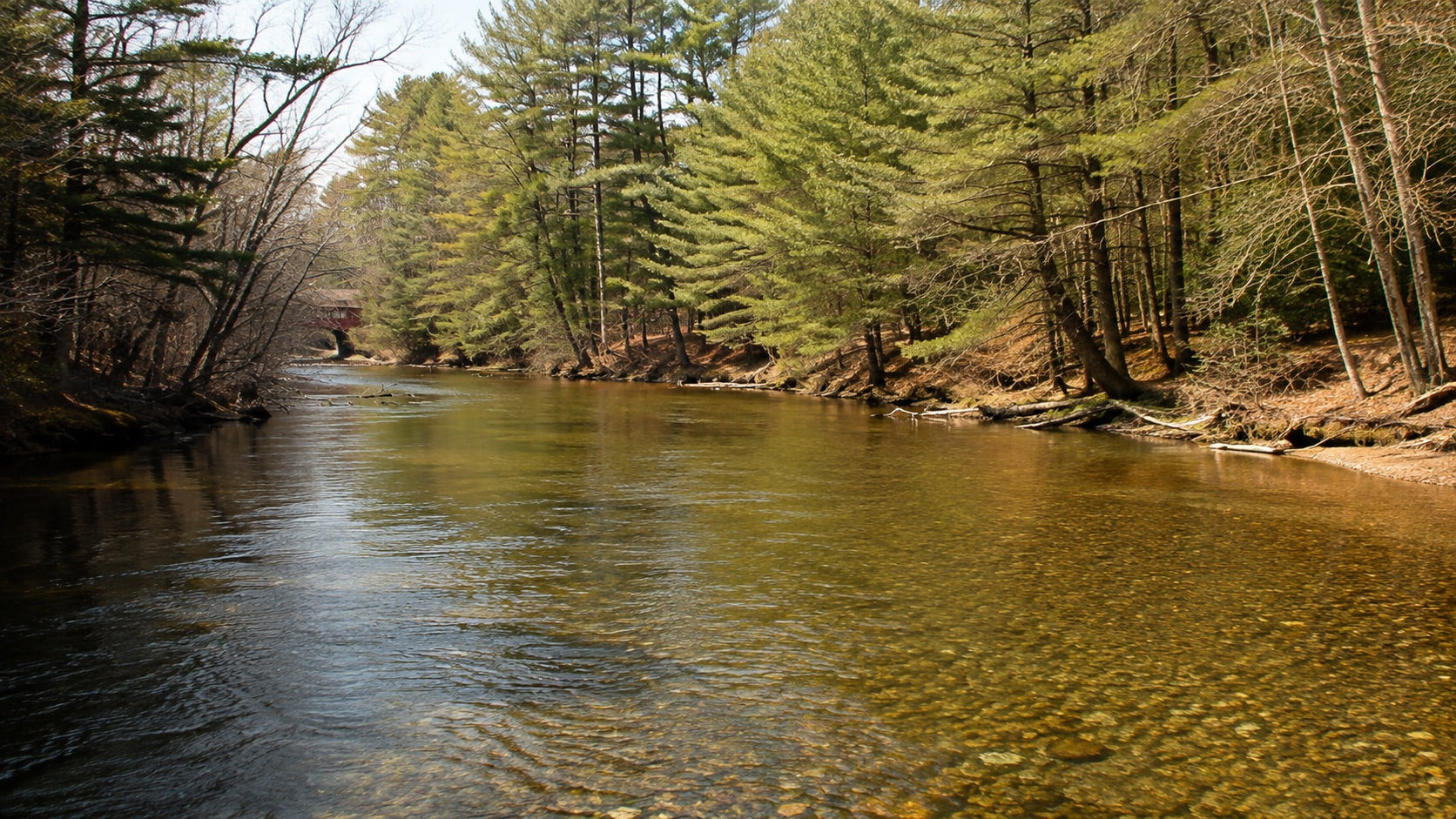
Released from seventy feet down in Quabbin, the Swift boils up cold and gin-clear at the Bubbler below Winsor Dam and stays cold twelve months a year. The Y-Pool's rainbows have seen every fly ever tied. Come with 6X, 7X, and patience.

Shop the Swift box →

The water

About the Swift

The Swift is the smallest, coldest, most technical trout river in Massachusetts — and one of the few worth fishing in the heat of August. It begins at the base of Winsor Dam in Belchertown, the outflow of Quabbin Reservoir, Boston's drinking water. The release is drawn from roughly seventy feet down, so the Swift boils up cold and gin-clear at a spot anglers call the Bubbler and stays cold — often in the 40s and 50s — twelve months a year. That's the whole appeal: while every freestone in the state is too warm by July, the Swift fishes.

It is very small water and it is very hard. The famous Y-Pool, right below the dam where two release channels meet in a Y, is full of rainbows that have seen every fly ever tied and refuse most of them. MassWildlife biologists call the Swift unlike anywhere else in the state — several thousand wild brook trout per mile, some pushing lengths you simply don't see elsewhere, alongside stocked rainbows and browns that hold over, wise up, and grow selective. The McLaughlin Hatchery sits right on the river, and the hatchery outflow concentrates fish at its own famous hole.

This is a river of small flies and light tippet: midges the year round, tiny Blue-Winged Olives spring and fall, and a standout October when the big fish move. Come with 6X and 7X, small flies down to sizes that make you squint, and the patience to sight-fish spooky trout in clear water. It is not a numbers river for the impatient. It is a place to get very, very good.

Regulations & Stamp

Winsor Dam (including the Y-Pool) downstream to the Route 9 crossing: fly-fishing only, catch-and-release, year-round. This is the strictest water — fly rod and fly line, no bait, all fish released.

The Route 9 bridge downstream to Cady Lane: catch-and-release, artificial lures and flies only, July 1 through December 31. From January 1 through June 30 this section reverts to general law.

A Massachusetts freshwater fishing license is required. Massachusetts does not sell a separate trout stamp.

On water this pressured, handle these fish like they matter — because a wild Swift brookie or a wised-up holdover truly does.

Stocking: MassWildlife stocks the Swift heavily from the on-river McLaughlin Hatchery — the state's largest — with rainbows and browns. But the cold, stable tailwater also grows genuinely wild brook trout in real numbers and turns stocked fish into selective holdovers. Big fish in the 16-to-20-inch class are not a fantasy here; they're the reason people put up with the difficulty.

Winsor Dam to Bondsville

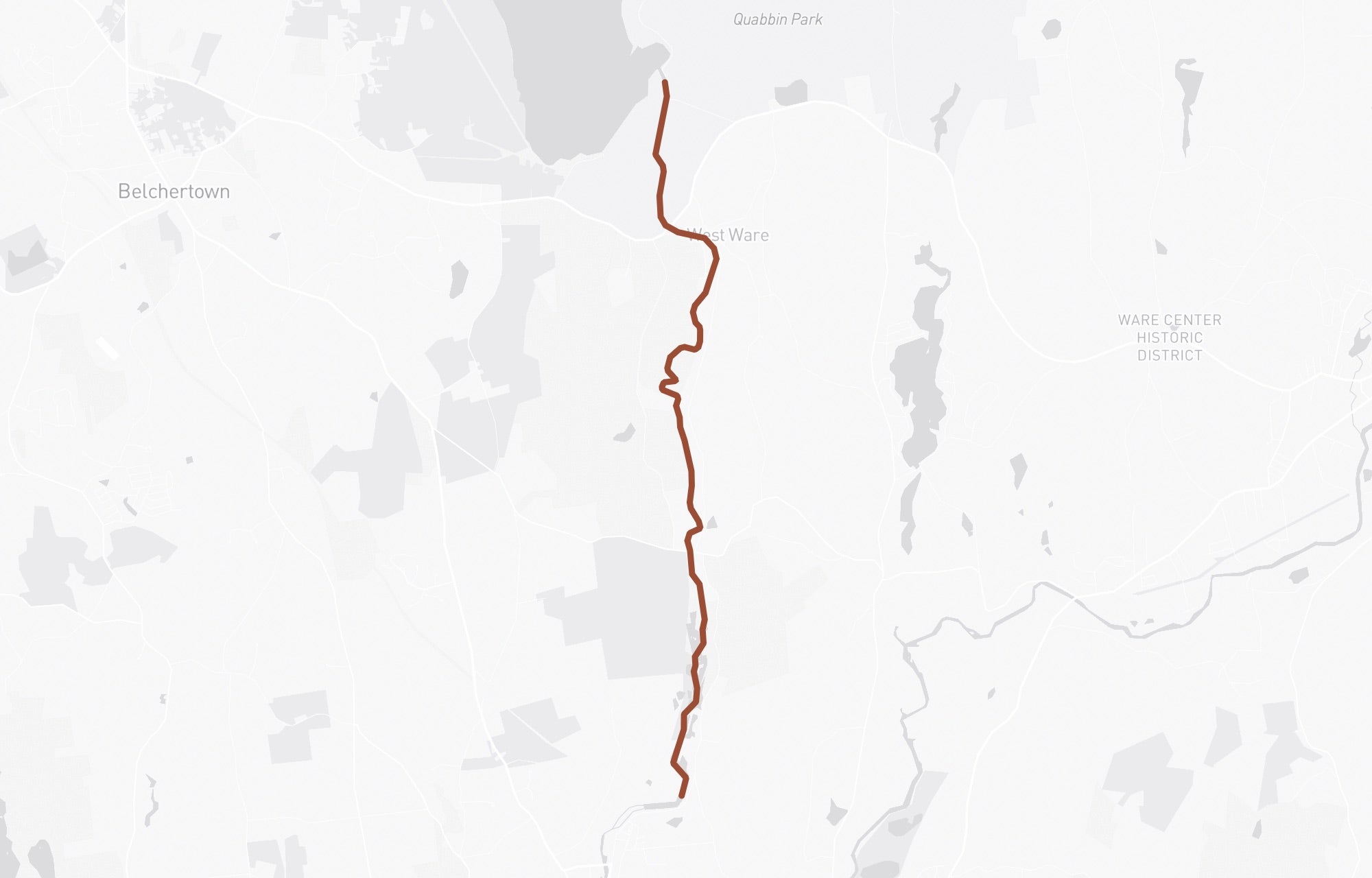
The Quabbin tailwater — from the Y-Pool below Winsor Dam past the McLaughlin Hatchery and the Route 9 crossing down to Cady Lane and Bondsville.

Key access, upstream to down

  1. The Y-PoolBelow Winsor Dam and the spillway, the top of the year-round catch-and-release water and the river's marquee spot; crowded on weekends for a reason.Get directions
  2. The Pipe / hatchery waterAround the McLaughlin Hatchery (East Street, Belchertown), where the hatchery outflow concentrates trout; reached on foot from the hatchery.Get directions
  3. The Route 9 crossingThe boundary between the strict upper fly-only water and the more general water below; regularly stocked and holding fish.Get directions
  4. The Tree Pool to Cady Lane & BondsvilleThe runs down toward Cady Lane and Bondsville — the lower end of the regulated water.Get directions

This week on the water

River Report

The current read on the water, with live flow and water temperature from the USGS gauges.

River Report

September 25, 2026

Swift is fishing well for September — flows are near normal and the bugs are on schedule.

Swift is reading about 120 cfs at the West Ware gauge this week — within the typical range for the date. That's about as good as the reading gets for the date — the fish are where they should be and willing to move for a well-presented fly. As a bottom-release tailwater it runs cold and steady even in a heat wave — the reason it keeps fishing when nearby freestone rivers go warm and slow.

September on the water: Fall run — aggressive fish; streamers and swung wets shine. Right now that means Muddler Minnow, Woolly Bugger, Soft Hackle, and BWO — carry a couple of sizes of each and let what's actually on the water pick the fly.

The read: It's a good week to be out — mornings and evenings will fish best as the light comes off the water. Water temperature matters more than the calendar in September — if it climbs into the high 60s, give the trout a rest and come back when it cools. Always confirm the current MassWildlife regulations before you go.

Compiled from the USGS gauge at West Ware and regional hatch timing — a read on the water, not a substitute for your own eyes on it.

Conditions & Access

Loading flow…

Loading the last 30 days of flow…

The box for this water

The Swift Box

The Swift runs cold, clear, and technical all year — a river that rewards small flies and a light touch. Midges, emergers, a scud for the bottom, and a Blue-Wing Olive for the afternoon rise.

$69.77$75.847 patterns · in a Day Tripper fly box

Save $6.07 vs. buying à la carte

Curated for the Swift. Hand-tied flies, shipped direct.

What’s in the box

  • Zebra MidgeSize 18 · 3-packBlack bead-head — the Swift’s steadiest fly, drifted deep and slow.
  • Griffith’s GnatSize 20 · 6-packFor trout sipping midge clusters in the surface film.
  • RS2 EmergerSize 20 · 3-packA gray emerger for fish keyed just under the surface.
  • Blue-Wing OliveSize 20 · 3-packThe classic fall dry when BWOs come off on a gray afternoon.
  • Pheasant TailSize 18 · 3-packA small confidence nymph that earns its place everywhere.
  • ScudSize 16 · 3-packThe Swift is a scud fishery — don’t wade in without one.
  • Rainbow WarriorSize 18 · 3-packA little flash to move pressured, picky trout.
  • Day Tripper Trout Fly Box The box Your flies arrive ready to fish, in a real fly box.

Season & hatches

The Swift, month by month

A cold tailwater dominated by midges year-round and Blue-Winged Olives spring and fall. Everything else is an accent. Sizes run small — often very small. Go tiny and light.

Month What's hatching / conditions Go-to flies
January Midges the staple, down to the smallest sizes; year-round C&R fishing on the cold water. Zebra Midge, Mercury Midge, RS2, small scuds
February Peak winter midging; overcast days best. Midges, RS2, scuds
March Midges continue; first BWOs possible on grey days. Midges, BWO emergers, Barr's Baetis, scuds
April BWOs emerge on overcast, drizzly days; fine tippet; midges constant. BWO dry & emerger, Barr's Baetis, midges, scuds
May Midges and BWOs; a general spring window; the odd caddis around. BWO, midges, scuds, Pheasant-Tail-style nymphs
June A brief Sulphur / PMD window late month; midges continuous. BWO, midges, small nymphs, scuds
July Trico spinner falls on cool mornings; terrestrials come into play; midges always. Cold, low, and technical. Midges, small BWOs, ants/beetles, scuds
August Midges the staple; tiny BWOs on grey mornings; Tricos on cool dawns; terrestrials along the banks. Stays cold and fishable. Midges (Zebra, Mercury), BWO, RS2, scuds, San Juan worm
September This month Transition; midges, early-fall BWOs, terrestrials; the bigger fish begin to move. BWO, midges, scuds, Perdigons
October Excellent — BWOs return strong on overcast days, mirror of April; big holdovers active and moving up. BWO, midges, scuds, Perdigons, San Juan worm
November Fall continues; BWOs on drizzle, midges; big-fish potential on the year-round water. BWO, midges, scuds, Perdigons
December Back to midges as the dominant food; cold-water winter fishing. Zebra & Mercury Midge, RS2, scuds

Hatch timing shifts with the season and the weather. Watch the water, not the calendar.

Know the fishery

  • Wild or stocked

    Wild and holdover rainbows and brook trout below the Quabbin — clear water and educated, technical fish.

  • The rig

    A 9–12 ft leader to 6X–7X; fish small, from #18 down to #22–26.

  • Release

    Catch-and-release below the dam. Fish barbless and keep them wet.

The flies

Flies That Fish Here

The flies we'd carry for the Swift right now — one pattern per card, pick your hook size.