The Deerfield

Massachusetts / Vermont · Fife Brook tailwater

The Deerfield

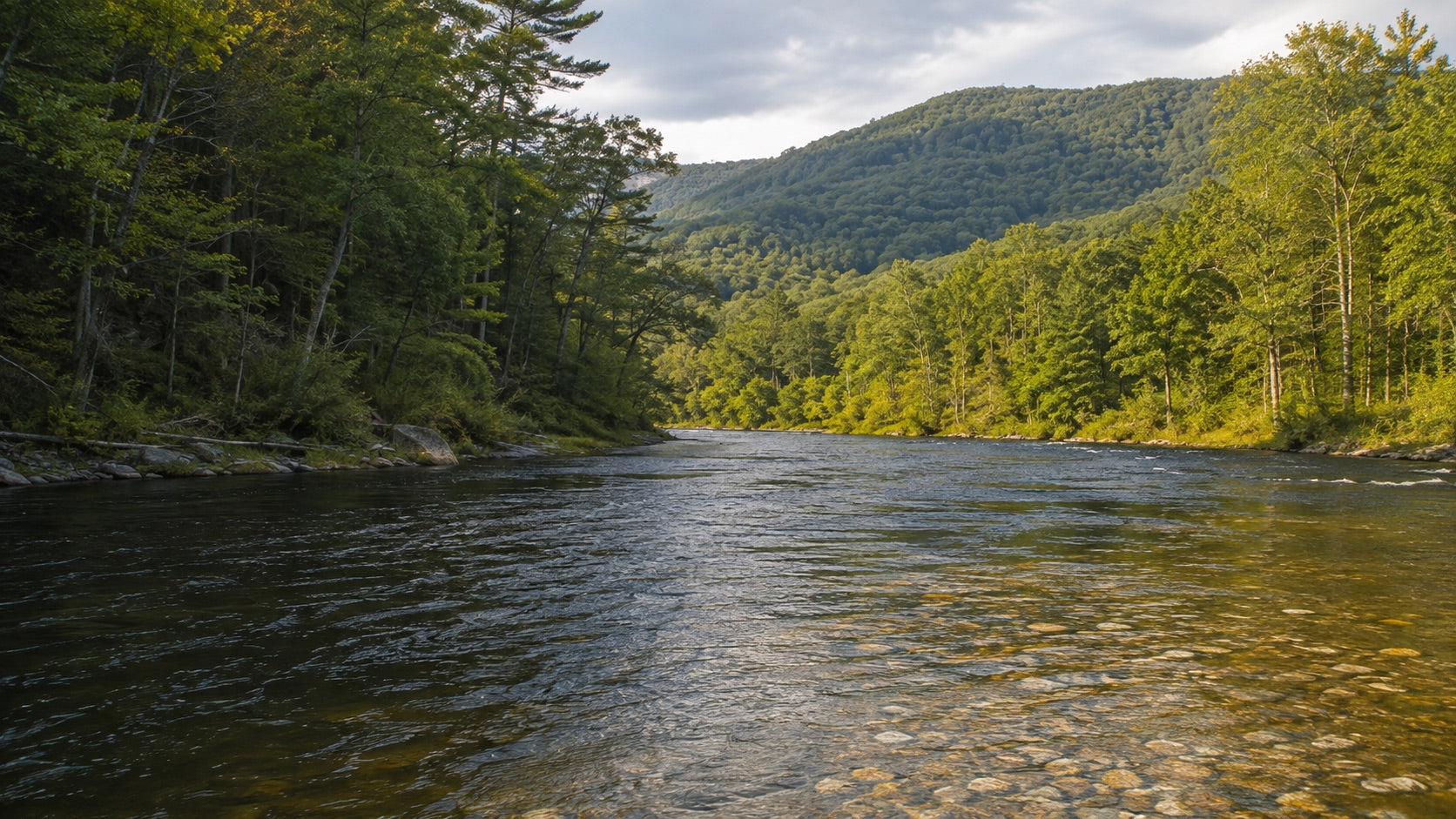
Cold water off the bottom draw — a tailwater that fishes all summer while the freestones quit.

Released cold from Fife Brook Dam, the Deerfield holds cool and holds trout twelve months a year down through Zoar Gap and the Mohawk Trail. More than eighty percent wild browns on the upper river. Come knowing the flow.

The water

About the Deerfield

The Deerfield is western Massachusetts's tailwater — a river that stays cold and fishable in August while the freestones around it warm into the 70s and quit. The reach that matters to a fly angler runs below Fife Brook Dam, the lower dam of the Bear Swamp pumped-storage project straddling the river in Rowe and Florida. Fife Brook makes bottom-draw releases, pulling deep, cold water off the lower reservoir, and that plumbing is the whole story: roughly seventeen miles below the dam the river holds cool and holds trout twelve months a year.

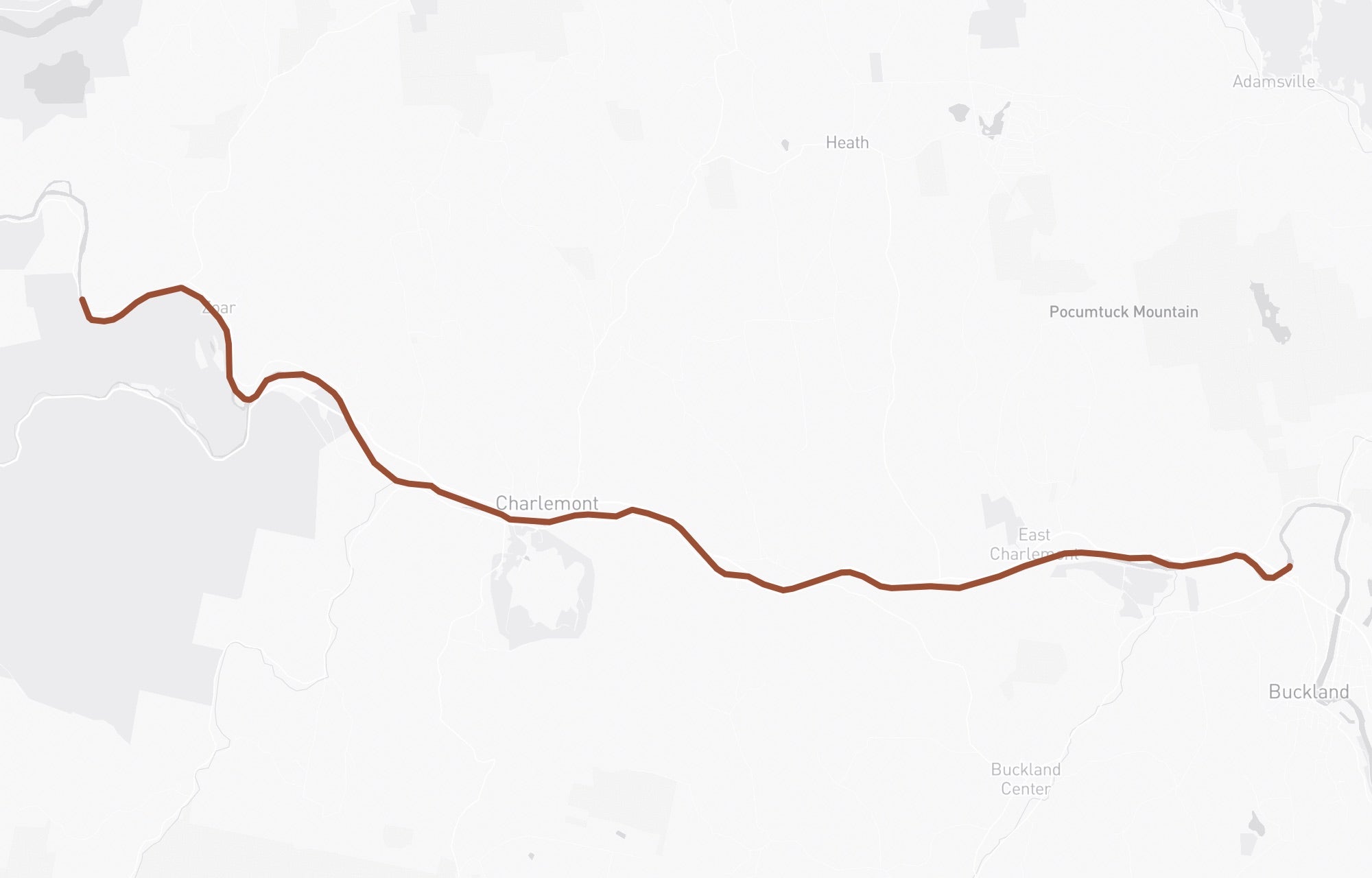
From the dam the water runs down through the Fife Brook section — the popular Class II–III paddling run — past the mouths of the Cold and Chickley Rivers, through Zoar Gap, and on along Route 2, the Mohawk Trail, through Charlemont toward Shelburne Falls and Deerfield. The upper river below the dam stays coldest and clearest; the lower river warms sooner and fishes best in the shoulder seasons. Above Fife Brook, the Monroe Bridge "Dryway" is a different animal — a mostly-diverted bypass reach that runs only on scheduled whitewater days — so don't confuse the two: the trout water is below Fife Brook.

What makes it fish is the cold water and a genuinely wild trout story. MassWildlife stocks the Deerfield, but a study of the upper river found more than eighty percent of the brown trout there are wild-born — enough that the state stopped stocking browns on the upper section. Add naturalized rainbows and a scattering of wild brookies in the tributaries and you have a real self-sustaining fishery, not a put-and-take stream. It's technical water that rewards a good drift, and the release schedule rewards a good plan. Come knowing the flow.

Regulations & Stamp

Two year-round Catch-and-Release, artificial-lures-and-flies-only sections:

  • Upper C&R: from just below Fife Brook Dam downstream about a mile and a half to the Hoosac Tunnel railroad trestle.
  • Lower C&R: from the mouth of Pelham Brook downstream roughly a mile to the Mohawk Trail Campground.

In both, it's artificial only — no bait — and all trout are released.

A Massachusetts freshwater fishing license is required (age 15+). Massachusetts does not sell a separate trout stamp; a small Wildlands Conservation Stamp is bundled with the license.

Two states: the Deerfield rises in southern Vermont. The reaches up around Monroe Bridge and Readsboro cross into Vermont, which requires a separate Vermont license. The tailwater C&R water below Fife Brook is entirely in Massachusetts.

A word on releases: Fife Brook runs whitewater releases on the order of a hundred days a year, and the river can jump from a low base to seven hundred–plus cfs within a day, usually beginning mid-to-late morning. Fish the low windows and keep an eye upstream — the water rises fast and unannounced on release days. Check the gauge and the operator's release line before you wade.

Stocking: MassWildlife stocks rainbow, brown, brook, and tiger trout, spring and fall, in the general reaches — but the upper river's reputation rests on its wild browns and naturalized rainbows, cold-tailwater fish that live and grow here.

Fife Brook Dam to Charlemont

The Fife Brook tailwater — from the dam down through Zoar Gap and along Route 2, the Mohawk Trail, toward Shelburne Falls and Deerfield.

Key access, upstream to down

  1. Fife Brook DamThe top of the tailwater fishery; a parking pull-off just downstream of the dam is the practical access, and the coldest, clearest water.Get directions
  2. River Road / Zoar RoadThe gravel road paralleling the river between the dam and Zoar Gap has numerous informal pull-offs used by wade anglers.Get directions
  3. Zoar GapThe Class III rapid; Zoar Picnic Area (Rowe) is the main parking and river access, a popular wade and take-out point.Get directions
  4. Pelham Brook pull-offParking on Zoar Road near the mouth of Pelham Brook; the start of the lower catch-and-release section.Get directions
  5. Shunpike Rest AreaOn Route 2 river-left, downstream of the Route 2 bridge in Charlemont; a common access and take-out.Get directions
  6. Route 2 (Mohawk Trail) corridorRoute 2 hugs the river through Charlemont and toward Shelburne Falls, giving roadside access to run after run.Get directions

This week on the water

River Report

The current read on the water, with live flow and water temperature from the USGS gauges.

River Report

August 6, 2026

The Charlemont gauge is dark on a hot, dry week — fish the early window and call the release line before Fife Brook bumps

The number we all live by — Charlemont, 01168500 — isn't reporting this week, and that matters more than usual right now. It's a hot, rainless stretch: upper-80s every afternoon through the weekend and barely a tenth of an inch of rain to freshen anything. Meanwhile Fife Brook is still on its summer whitewater schedule, jumping the river off a low base toward 700-plus cfs somewhere between 9:30 and noon. With no gauge to read, don't guess — call the H2Oline release line (844-430-FLOW) before you pull on waders and build the day around that bump.

The bottom-draw out of Fife Brook is what saves you in heat like this. The coldest, clearest water is up top — the C&R from the dam down to the Hoosac Tunnel trestle and the River Road pull-offs — while the lower river toward Charlemont and the Shunpike warms through a bright afternoon. Stay high when the sun's on the water. Best light is early, before the release and before the glare, then again at dusk. Terrestrials are the meal: a beetle or ant worked tight to the bank, or a hopper-dropper with a Pheasant Tail hung underneath through the seams below Zoar Gap.

Light Cahills are tapering but still worth the last hour of light, and we're right at the front edge of the fall Blue-Winged Olives — if this morning's cloud cover holds into an afternoon, a small olive can flip a slow session. Otherwise a midge keeps you honest in that cold water. Fish early, be off the river before it pushes, and let the release schedule set your clock.

Conditions & Access

Loading flow…

Loading the last 30 days of flow…

Season & hatches

The Deerfield, month by month

The tailwater runs cold all year, so there's almost always a midge option and a dependable hatch progression. Sizes are typical ranges; go smaller when in doubt.

Month What's hatching / conditions Go-to flies
January Midges through the warm middle of the day; deep nymphing otherwise. Zebra Midges, small nymphs, Perdigons
February Midges; the cold tailwater keeps fish feeding; nymphing. Midges, small dark nymphs, Perdigons
March Midges pick up; early little black stones; first Blue-Winged Olives on grey days. BWO emergers, Pheasant Tail & Hare's Ear nymphs, midges
April Quill Gordons, Blue Quills, first Hendricksons (mid-month), little black caddis, spring BWOs. Dark Hendrickson, Elk Hair Caddis, BWO, Hare's Ear & Pheasant Tail nymphs, caddis larva
May Hendricksons peak; the signature Grannom / apple caddis; March Browns start mid-month; PMDs and larger BWOs begin. Elk Hair Caddis, March Brown, PMD dries, caddis pupa & larva, soft hackles
June Sulphurs / PMDs the marquee evening bug; March Browns; Light Cahills; Isonychia begins; caddis; terrestrials start. PMD dries & cripples, Light Cahill, caddis pupa, Pheasant Tail nymphs, hoppers
July Sulphurs into month's end; Light Cahills; Isonychia; terrestrials ramping — ants, beetles, hoppers; midges; low, technical water. Terrestrials, Light Cahill, caddis, Pheasant Tail & Prince nymphs, midges
August This month Terrestrials primary (hoppers, ants, beetles); Light Cahills taper; Isonychia; midges; morning and evening. Tailwater cold; lower river warm. Hoppers, ants, beetles, Elk Hair Caddis, Pheasant Tail & Hare's Ear nymphs, midges
September Isonychia (Slate Drake) — some of the year's best dry-fly fishing; October caddis begins; fall BWOs; streamers as browns pre-spawn. Isonychia, streamers, BWO, Prince & Pheasant Tail nymphs, terrestrials
October October caddis; fall BWOs on grey afternoons; streamers for aggressive pre-spawn browns. October caddis pupa, BWO, streamers, soft hackles
November Late BWOs on mild days; midges; the brown-trout spawn (respect the redds); winter minimum flow kicks in. Midges, BWO, caddis larva, small nymphs, streamers
December Midges; the cold tailwater keeps fish on; deep, slow nymphing. Zebra Midges, small nymphs, Perdigons

Hatch timing shifts with the season and the weather. Watch the water, not the calendar.

Know the fishery

  • Wild or stocked

    A stocked freestone with a strong holdover population — expect bigger, bolder flies than the tailwaters.

  • The rig

    A 9 ft leader to 4X–5X handles the pocket water and the streamers.

  • Release

    The special-regulation stretches are catch-and-release. Pinch your barbs.

The box for this water

The Deerfield Box

The Deerfield is a caddis river with freestone character and dam-cooled flows. This is the box for pocket water and pooled runs — caddis, a big attractor, and the searching nymphs that move fish.

$63.76$69.307 patterns · in a Day Tripper fly box

Save $5.54 vs. buying à la carte

Curated for the Deerfield. Hand-tied flies, shipped direct.

What’s in the box

  • Elk Hair CaddisSize 14 · 3-packThe Deerfield is a caddis river.
  • Prince NymphSize 12 · 3-packHeavy-water attractor nymph.
  • Hare’s EarSize 14 · 3-packThe all-purpose freestone nymph.
  • March BrownSize 12 · 3-packSoft-hackle for the spring hatch.
  • Blue-Wing OliveSize 18 · 3-packOvercast-day dry.
  • StimulatorSize 12 · 3-packRides big pocket water; doubles as a stonefly.
  • Pheasant TailSize 16 · 3-packFlashback nymph for freestone trout.
  • Day Tripper Trout Fly Box The box Your flies arrive ready to fish, in a real fly box.

The flies

Flies That Fish Here

The flies we'd carry for the Deerfield right now — one pattern per card, pick your hook size.