The Battenkill

Vermont / New York · Wild-trout freestone

The Battenkill

The finishing school of the East — cold, clear, infertile water full of wild browns and brookies as smart as any trout in the country.

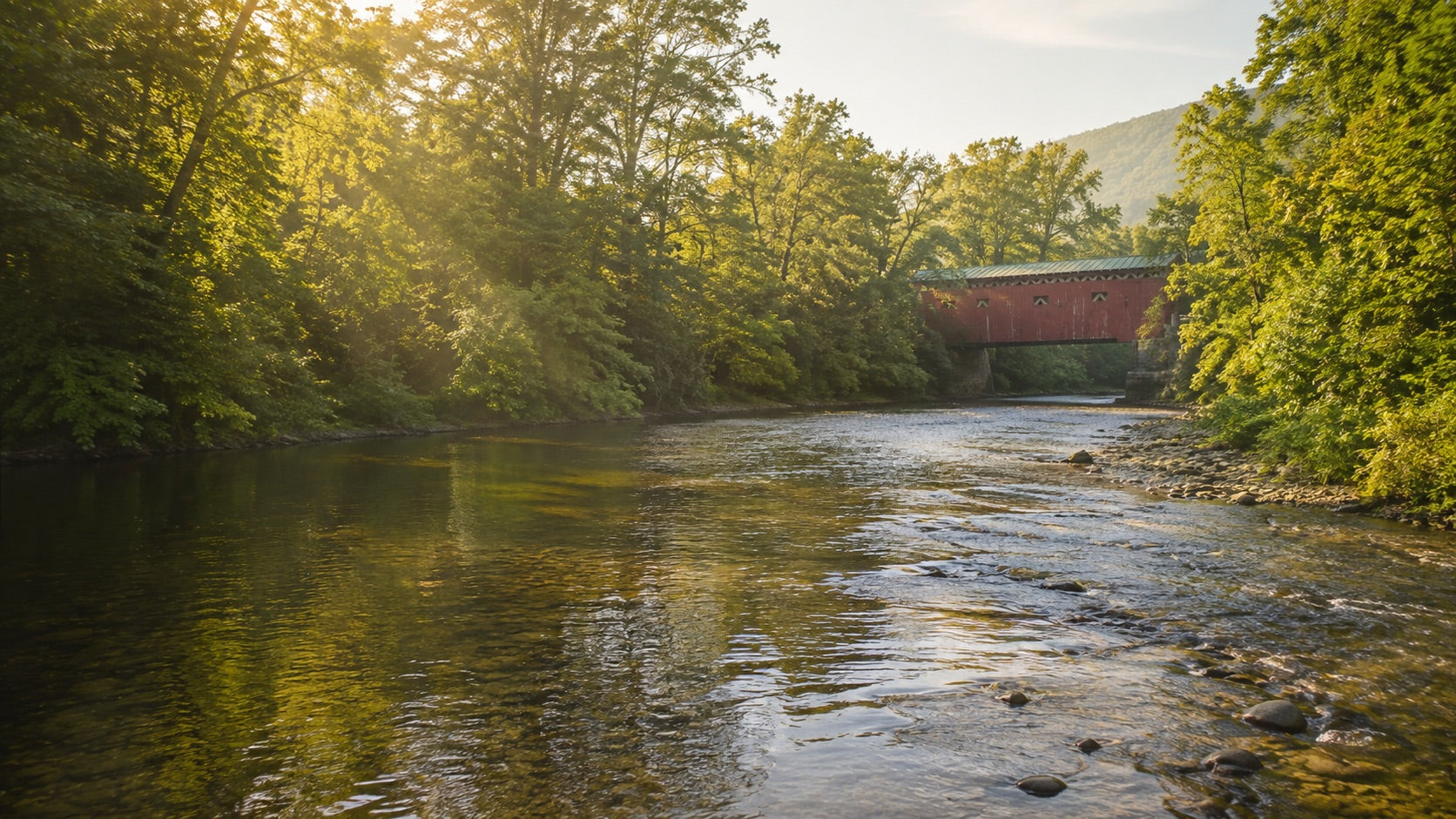
Undammed and gin-clear, the Battenkill runs from Manchester, Vermont through Arlington into New York. The Vermont main stem is wild and unstocked. A long leader, a fine tippet, and a drag-free drift are the price of admission.

The water

About the Battenkill

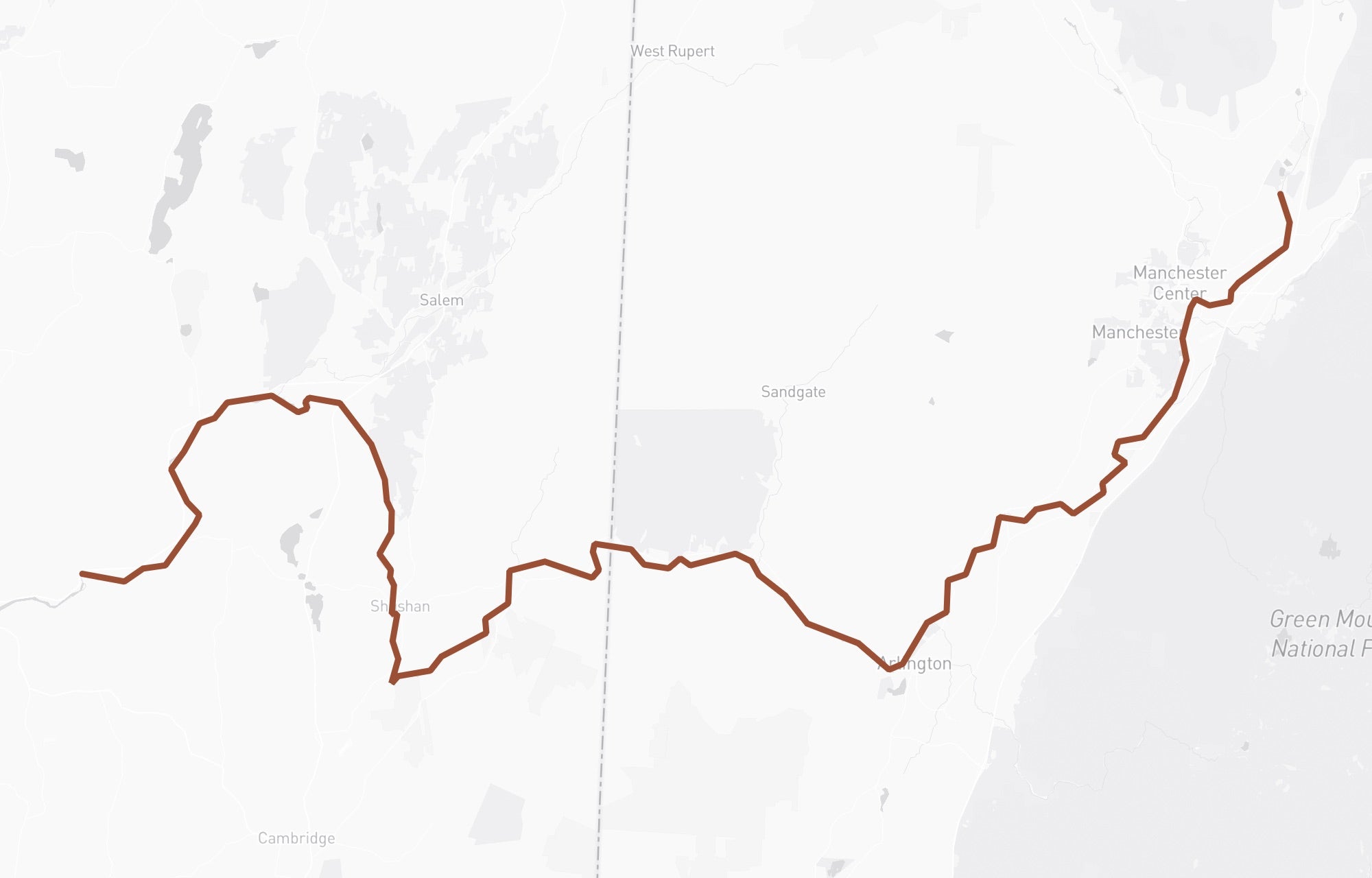
The Battenkill is the river that humbles people. It rises where the East and West Branches meet in Manchester, Vermont — in the shadow of Orvis, founded here in 1856 — and runs about sixty miles through Arlington and West Arlington, crosses into New York near Shushan, and drops through Battenville and Greenwich to the Hudson. It is not a tailwater. It's a freestone, undammed, but a cold, clear, spring-and-limestone-influenced one, and above all it is infertile — low in the nutrients that grow big bugs and easy fish. That poverty is the point: the Battenkill grows wild brown and wild brook trout that are as smart and as spooky as any trout in the country.

The Vermont main stem is wild and unstocked — the state manages it as a wild-trout fishery and stopped stocking it decades ago. The fish are not many and they are not dumb. This is heavily pressured, gin-clear water where a long leader, a fine tippet, and a drag-free drift are the price of admission. Anglers have called it the "finishing school" for fly fishers, and it earns the name. Get it right here and you can fish anywhere.

Because it's a freestone and not a tailwater, the calendar matters more than on the Farmington or the Deerfield. The Battenkill fishes best in spring and fall, when the water is cold and up; by high summer it runs low, warm, and clear, and the game turns to terrestrials at first and last light. Come for the challenge, and carry a thermometer.

Regulations & Stamp

Vermont — a roughly twenty-mile catch-and-release, artificial-lures-and-flies-only section runs from the New York state line upstream to the Depot Street bridge (Route 11/30) in Manchester. All trout must be released. The Vermont trout season runs the second Saturday in April through October 31; the upper water is closed November 1 to opening day to protect spawning fish. A Vermont license is required.

New York — from the Vermont line downstream to the Eagleville covered bridge, the water is year-round catch-and-release, artificial lures only. Below that, general New York trout-stream regulations apply. A New York license is required.

Fishing both states in a day means carrying both licenses — the line runs right through the West Arlington stretch.

Stocking: The Vermont main stem is wild and unstocked — brown and brook trout that were born in the river, generally larger as you move downstream. New York stocks its portion with brown trout and holds some wild fish as well. Everywhere, treat these fish as the slow-growing wild animals they are: wet your hands, keep them in the water, and pinch your barbs.

Manchester to Battenville

The Battenkill freestone — from the branch confluence at Manchester, VT down through Arlington and West Arlington, across the state line to Shushan and Battenville, NY.

Key access, upstream to down

  1. Manchester, VTThe headwaters and the branch confluence; the Orvis flagship and the American Museum of Fly Fishing sit here. Route 7A follows the river south.Get directions
  2. Arlington / West Arlington, VTThe classic Vermont water along Route 7A and Route 313; the West Arlington covered bridge is a well-known access.Get directions
  3. Shushan / Salem, NYRoute 313 carries the river-and-road corridor west across the state line; Eagleville Road and the Eagleville covered bridge mark the downstream end of the New York special-reg water.Get directions
  4. Rexleigh covered bridge, NYSpans the Battenkill in Jackson, off Route 22 near Shushan; a good access to the lower special-reg reach.Get directions
  5. Battenville, NYThe downstream end of the trout water and the site of the live USGS gauge.Get directions

This week on the water

River Report

The current read on the water, with live flow and water temperature from the USGS gauges.

River Report

August 6, 2026

Last week's high water gave the Battenkill an August reprieve — fish the first-light window

The flood that blew the river out around the end of July has settled back, and Battenville (USGS 01329490) is reading 374 cfs — more water than an August usually gives you here. That's a gift on a freestone that's normally a low, warm trickle by now. But don't get careless: the last shop read had it at 70°F, right at the edge for these wild browns. Carry a thermometer and fish the cool end of the day.

The game is the same as every Battenkill August, just with a little more current under it. Be on the water at first light for the Trico spinner fall on the flats — size 20-and-under, twelve-foot leader, tippet finer than you think you need. As the sun climbs, move to terrestrials tucked tight to the grassy banks through the Arlington and West Arlington runs, and down into the New York catch-and-release water below the Eagleville bridge. This is unstocked, gin-clear water; the drag-free drift is the price of admission.

Days push into the mid-80s this week, but nights dropping into the low 60s keep the river honest overnight, and a little rain Saturday won't hurt. Fish hard through mid-morning, then let them be through the heat. Pinch the barbs, keep them wet — these are slow-growing fish that were born here.

Conditions & Access

Loading flow…

Loading the last 30 days of flow…

Season & hatches

The Battenkill, month by month

A freestone hatch calendar: rich in spring and fall, thin and technical in high summer. Sizes are typical ranges; the Battenkill rewards going a size smaller and a shade lighter.

Month What's hatching / conditions Go-to flies
January VT water closed; midges only on the mildest NY days. Deep winter. Midges, small nymphs
February Winter still holds; midges on warm afternoons in NY. Midges, small dark nymphs
March Early black stoneflies; midges; first BWOs on mild afternoons. High, cold, often off-color. Small nymphs, Pheasant Tail & Hare's Ear, midges
April Runoff early, then it settles; Hendricksons begin mid-month; early caddis; BWOs. Season opens. Dark Hendrickson, Elk Hair Caddis, Hare's Ear & Pheasant Tail nymphs
May Peak spring: Hendricksons, the Grannom / apple caddis, March Browns / Grey Fox starting mid-month, tan and green caddis, first Light Cahills. March Brown, Elk Hair Caddis, caddis pupa & larva, soft hackles, PT nymphs
June March Browns and Grey Fox early, Sulphurs, Light Cahills, tan caddis, Isonychia beginning; water dropping and clearing. Light Cahill, Elk Hair Caddis, caddis pupa, Pheasant Tail nymphs, soft hackles
July Isonychia, tapering Sulphurs, tan caddis, first Tricos at dawn; terrestrials — ants and beetles — get important; low and clear. Terrestrials, Elk Hair Caddis, Pheasant Tail nymphs, caddis pupa
August This month Tricos at first light; heavy terrestrials (ants, beetles, hoppers); sporadic caddis and BWOs. Low, warm, technical. Ants, beetles, hoppers, Adams, caddis, Pheasant Tail nymphs
September Early Tricos, fall BWOs ramping, terrestrials still good, October caddis appears; cooling water; browns coloring up. BWO, terrestrials, streamers, caddis pupa, PT & Hare's Ear nymphs
October Fall BWOs the main event, October caddis, midges; streamers for pre-spawn and spawning browns. VT season closes Oct 31. BWO, October caddis pupa, streamers, soft hackles
November VT water closed for the spawn; NY open — streamers, midges, BWOs on mild days. Streamers, midges, small nymphs
December Winter mode — midges on the mildest days; slow. Midges, small nymphs

Hatch timing shifts with the season and the weather. Watch the water, not the calendar.

Know the fishery

  • Wild or stocked

    All wild, no stocking — spooky, hard-earned brown trout and native brookies.

  • The rig

    A long 12 ft leader to 5X–6X; the ’Kill punishes a heavy tippet.

  • Release

    Catch-and-release for wild trout. Barbless, wet hands, quick release.

The box for this water

The Battenkill Box

The Battenkill rewards a light touch and a quiet approach — storied, low, and full of wild browns. Small drab dries, a summer terrestrial, and the subtle nymphs that fool educated fish.

$64.68$70.307 patterns · in a Day Tripper fly box

Save $5.62 vs. buying à la carte

Curated for the Battenkill. Hand-tied flies, shipped direct.

What’s in the box

  • Parachute AdamsSize 16 · 3-packA light-touch dry for wary browns.
  • Blue-Wing OliveSize 18 · 3-packSmall and drab, the way the ’Kill likes it.
  • Light CahillSize 14 · 3-packThe early-summer evening dry.
  • Foam BeetleSize 14 · 3-packA summer terrestrial along the banks.
  • Pheasant TailSize 16 · 3-packThe subtle confidence nymph.
  • Hare’s EarSize 16 · 3-packA buggy searching nymph.
  • Flying AntSize 16 · 3-packThe overlooked summer killer.
  • Day Tripper Trout Fly Box The box Your flies arrive ready to fish, in a real fly box.

The flies

Flies That Fish Here

The flies we'd carry for the Battenkill right now — one pattern per card, pick your hook size.