The Farmington

Connecticut · Wild & Scenic tailwater

The Farmington

Cold, consistent, technical — a tailwater that fishes twelve months a year.

Released cold from the bottom of Hogback below Goodwin Dam, the West Branch holds in the 50s while the freestones around it shut down. Riverton to New Hartford, spring runoff to winter midging.

The water

About the Farmington

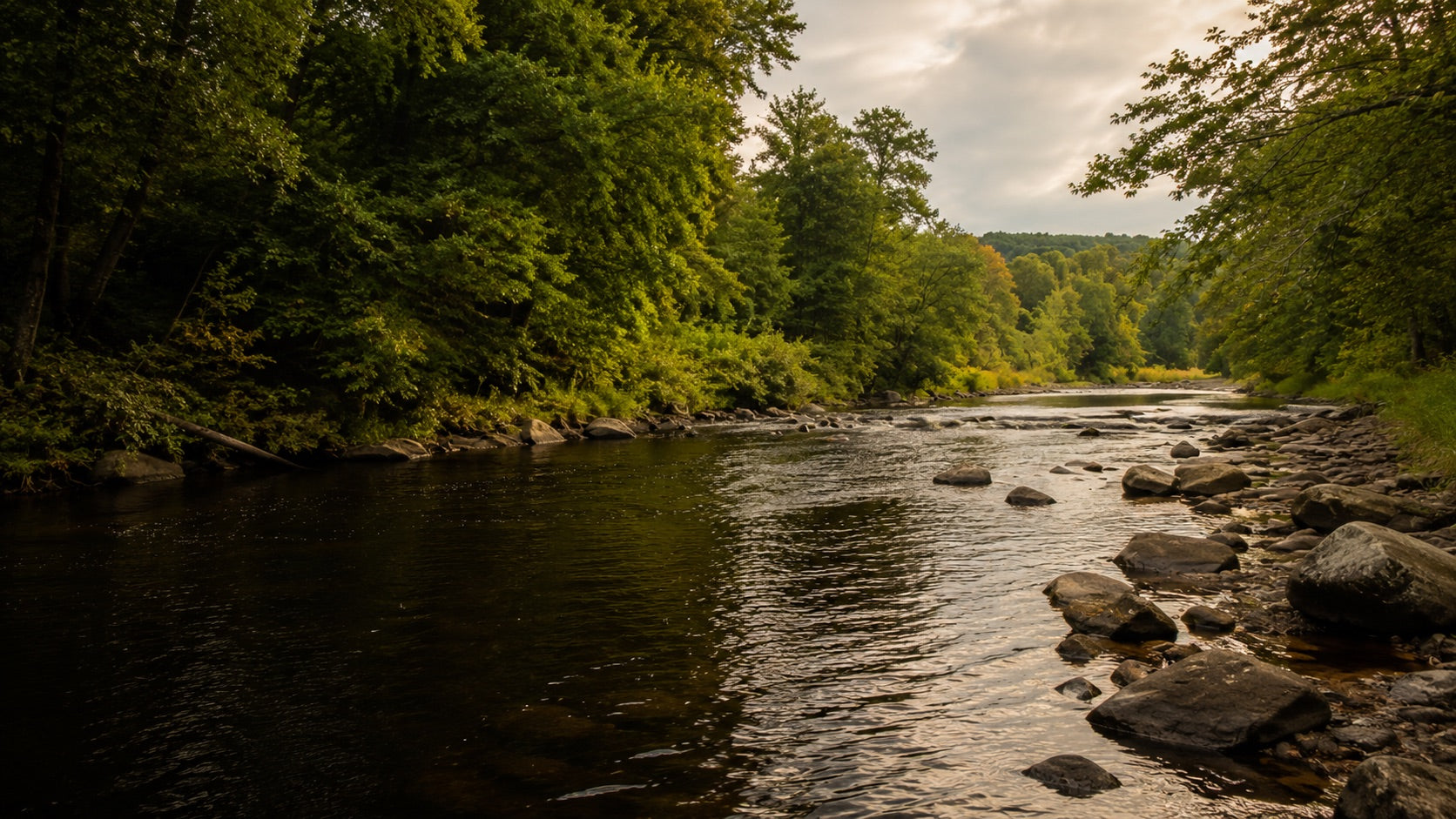
The Farmington is Connecticut's tailwater — one of the finest wild and holdover trout fisheries in the Northeast. The water that matters is the West Branch, released cold from the bottom of Hogback below Goodwin Dam. That bottom-release plumbing is the whole story: while the freestones around it warm into the 70s and shut down every August, the West Branch holds in the 50s even when the air is over 90. It fishes twelve months a year.

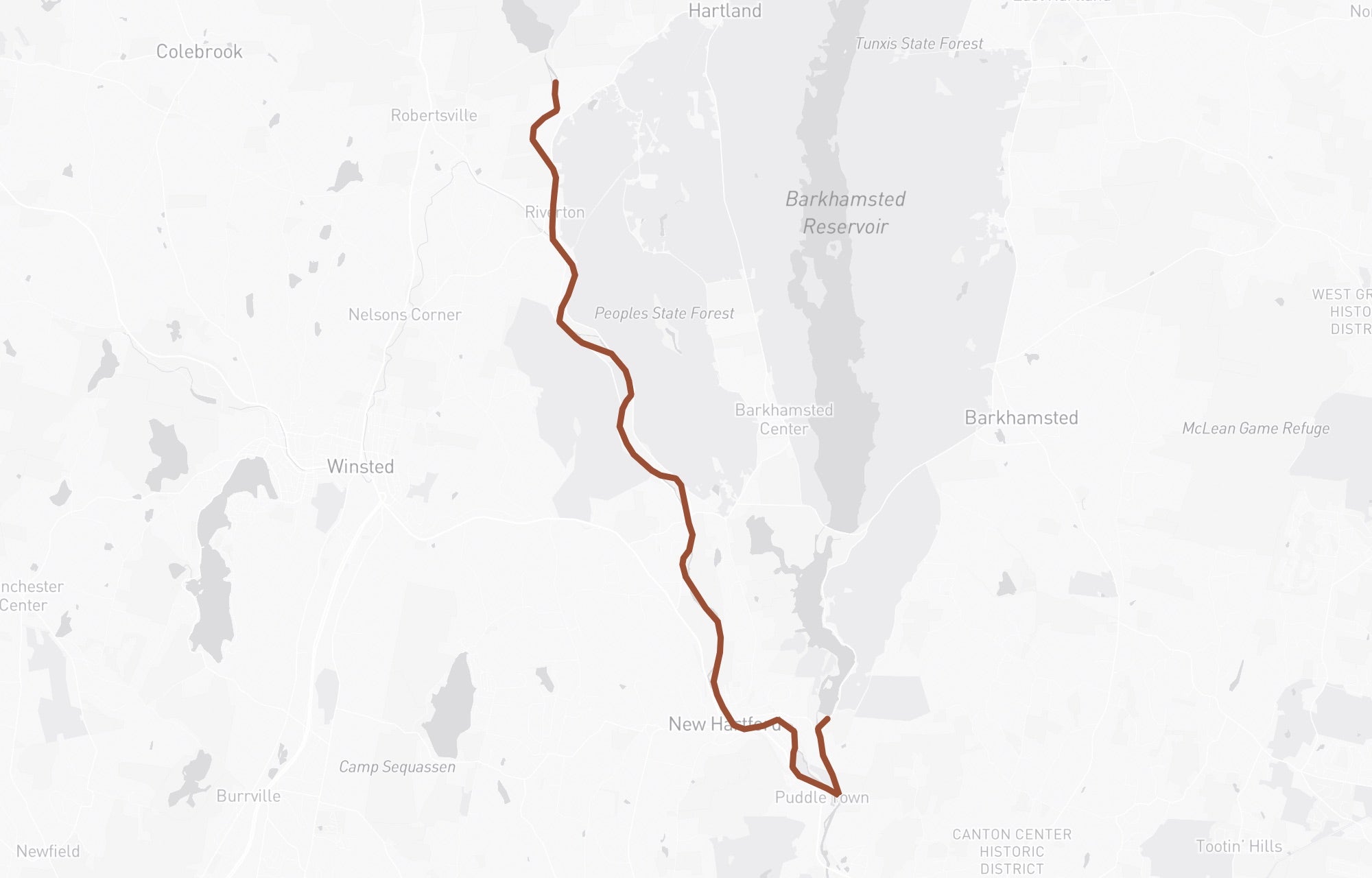
Below the dam the river runs through Riverton, past People's State Forest, down through the permanent catch-and-release water around New Hartford and Pleasant Valley. The upper reaches stay coldest and clearest; the water warms sooner and fishes best in the shoulder seasons downstream. Roughly fifteen miles carry federal Wild & Scenic designation.

What makes it fish is a rare combination: dependable cold water, a genuinely diverse insect population, and a self-sustaining brown trout population reinforced by CT DEEP's Survivor Strain program. In the big pools — the Church Pool, the Boneyard, Greenwoods — holdovers make up a real share of the fish, and browns north of twenty inches are landed every season. This is technical water that rewards a good drift and punishes a lazy one.

Regulations & Stamp

Permanent Trout Management Area / Catch-and-Release: a roughly one-mile-plus reach on the MDC Greenwoods property, from the old footbridge abutments in Barkhamsted downstream to the Route 219 bridge in New Hartford (the former West Branch TMA). This zone is year-round catch-and-release, barbless hooks only, all tackle. Pinch your barbs and handle fish in the water.

A Connecticut Trout & Salmon Stamp is required to fish for trout here, in addition to a fishing license.

Outside the C&R zone, general CT DEEP river-and-stream rules apply — creel and length limits and seasonal C&R periods vary by reach. Much of the river is open year-round.

Stocking: CT DEEP (with the MDC) stocks brown and rainbow trout in the West Branch in spring and fall. The river's reputation rests on its wild and holdover browns and the Survivor Strain broodstock program — Farmington fish that have proven they can live and grow here.

Riverton to New Hartford

The West Branch tailwater — from Goodwin Dam at Riverton down through the permanent catch-and-release water to New Hartford. Tap a pin for details and directions.

Key access, upstream to down

  1. RivertonThe top of the fishery — coldest, clearest water, right below Goodwin Dam.Get directions
  2. Church PoolPeople's State Forest — the classic pool everyone knows.Get directions
  3. The Boneyard / GreenwoodsPermanent catch-and-release / TMA water on the MDC Greenwoods property — barbless only.Get directions
  4. New Hartford (Rte 219)The downstream end of the permanent catch-and-release water at the Route 219 bridge.Get directions

This week on the water

River Report

The current read on the water, with live flow and water temperature from the USGS gauges.

River Report

August 6, 2026

Cold and low at Riverton — Isonychia in the fast water, Tricos at first light

The West Branch is running cold and low — 119 cfs and 48.6°F on the Riverton gauge, about as clear as this river gets. The bug worth chasing is the Isonychia coming off the broken water through People's State Forest and the pocket water above the Church Pool: big slate drakes that pull fish up out of the fast seams. Dead-drift or swing the nymph, then switch to a Comparadun when you see noses. This is the one hatch here that rewards fishing the heavy water instead of tiptoeing the flats.

Bookend your day around it. First light belongs to the Tricos — spinner falls carpet the softer water above New Hartford in the first two hours after sunrise, and the fish turn maddeningly selective; a spent-wing on 6x or 7x is the price of admission. Midday, work ants and beetles tight to the banks and keep a small BWO handy for any grey stretch. Come evening the Cahills and Rusty Spinners take the tailouts.

Where you stand matters more than usual right now. Stay up in the cold top ten miles — Riverton down to the Route 219 bridge in New Hartford. Below the Still River the water's already nosing into the mid-60s and the trout know it. Low, clear flows mean long leaders, light tippet, and wading like you're sneaking up on them, because you are. The release has held near 120 — check the Riverton gauge before you commit. See you at dawn; bring the reading glasses for those Tricos.

Conditions & Access

Loading flow…

Loading the last 30 days of flow…

What to fish

Flies

The hatch calendar for this water, the box we'd carry right now, and every pattern we tie for the Farmington — take the box or pick them singly.

Month What's hatching / conditions Go-to flies
January Midges through the warm middle of the day; deep nymphing otherwise. Zebra Midges, small nymphs (scuds, Perdigons)
February Midges; early black stoneflies begin; classic winter tailwater fishing. Midges, small dark nymphs, Perdigons
March Early black stones, Blue Quills, first Blue-Winged Olives on grey days. BWO dries/emergers, small stone/mayfly nymphs, midges
April Quill Gordons, Hendricksons (mid-month), Grannom/little black caddis, spring BWOs. Dark Hendrickson, Elk Hair Caddis, BWO, Hare's Ear & Pheasant Tail nymphs, caddis larva
May Hendricksons winding down; heavy caddis; March Browns, Grey Fox, Sulphurs begin; a brief Green Drake window. Elk Hair Caddis, March Brown, PMD/Sulphur dries, caddis pupa emergers, soft hackles
June Sulphurs the marquee evening hatch; Light Cahills; Isonychia in fast water; summer caddis; Tricos begin late. PMD/Sulphur dries & cripples, Light Cahill, Isonychia, caddis pupa, PT nymphs
July Tricos at dawn; Isonychia; tan/cinnamon summer caddis; terrestrials midday; midges. Trico/spinner patterns, Isonychia, caddis, terrestrials, small nymphs
August This month Tricos (early-morning spinner falls), summer caddis, terrestrials (ants/beetles/hoppers), midges; low-light windows. Tailwater cold; lower river warm. Rusty Spinner, small caddis, terrestrials, scuds, Zebra Midges, Perdigons
September Fall BWOs on grey days, Isonychia into mid-month, tail-end terrestrials, streamer season opening as browns pre-spawn. BWO, Isonychia, streamers, PT & Hare's Ear nymphs
October Fall BWOs the main event on drizzly afternoons; Isonychia early; October caddis; aggressive pre-spawn browns. BWO, October caddis pupa, streamers, soft hackles
November Winter caddis, late BWOs on mild days, midges; nymphing takes over. Midges, caddis larva, Perdigons, small nymphs
December Midges through the midday warm spell; deep, slow nymphing. Zebra Midges, small nymphs, scuds

Hatch timing shifts with the season and the weather. Watch the water, not the calendar.

Know the fishery

  • Wild or stocked

    Wild Survivor Strain browns hold over year-round alongside stocked trout — the West Branch fishes wild and technical.

  • The rig

    A 9–12 ft leader to 5X–6X for dries and nymphs; drop to 4X for streamers.

  • Release

    Much of the West Branch is catch-and-release TMA water. Pinch your barbs and keep them wet.

The box for this water

The Farmington Box

The Farmington fishes when everything else naps — a cold, consistent tailwater from Riverton down. Caddis in the riffles, a spinner for the evening, and the reliable nymphs that carry a technical day.

$63.76$69.307 patterns · in a Day Tripper fly box

Save $5.54 vs. buying à la carte

Curated for the Farmington. Hand-tied flies, shipped direct.

What’s in the box

  • Blue-Wing OliveSize 20 · 3-packThe reliable Farmington afternoon dry.
  • Elk Hair CaddisSize 16 · 3-packRiffle caddis, in season all summer.
  • Pheasant TailSize 18 · 3-packThe everywhere nymph.
  • Zebra MidgeSize 18 · 3-packFor winter and low, clear water.
  • Rusty SpinnerSize 16 · 3-packThe spinner fall almost no one matches.
  • Prince NymphSize 14 · 3-packA searching attractor nymph.
  • Hare’s EarSize 16 · 3-packBuggy, generic, and deadly.
  • Day Tripper Trout Fly Box The box Your flies arrive ready to fish, in a real fly box.

The flies

Flies That Fish Here

The flies we'd carry for the Farmington right now — one pattern per card, pick your hook size.